Voice Leading in Music Theory

Voice leading: The Art of Smooth Harmony
Voice leading refers to the way individual voices (or melodic lines) move from one note to another, especially in harmony. It’s all about creating smooth transitions between chords and avoiding jarring or awkward jumps. While it’s deeply rooted in classical traditions, it remains a key concept in modern music across all genres.
The Importance of Voice Leading
Fundamental Concepts
In music, we have multiple voices (think of them like different instruments or melodic lines), and the goal is for them to move from one chord to the next in a way that feels natural. Good voice leading makes a piece of music sound cohesive and pleasant, while poor voice leading can create unwanted tension or clashing.
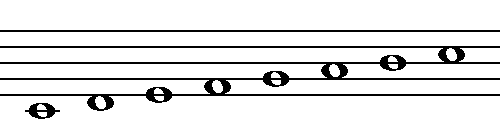
- Stepwise Motion:
- The simplest and most effective technique is stepwise motion, where a note moves up or down by a single step (e.g., from C to D). Stepwise motion creates smooth transitions between notes and is the hallmark of smooth voice leading.
- Avoiding Large Leaps:
- While leaps are sometimes necessary for musical expression, too many large jumps between notes can sound jarring. Voice leading seeks to minimize these large leaps between chords, preferring stepwise motion or small intervals (a third or a fifth, for example).
- While leaps are sometimes necessary for musical expression, too many large jumps between notes can sound jarring. Voice leading seeks to minimize these large leaps between chords, preferring stepwise motion or small intervals (a third or a fifth, for example).
- Consonance Over Dissonance:
- In traditional voice leading, you want to maintain consonant intervals (thirds, sixths, perfect fifths) between voices. While dissonance can add drama and tension, it’s usually resolved in smooth, predictable ways, often through stepwise motion.
Classic Rules (Common Practice Period)
- Soprano-Bass Motion:
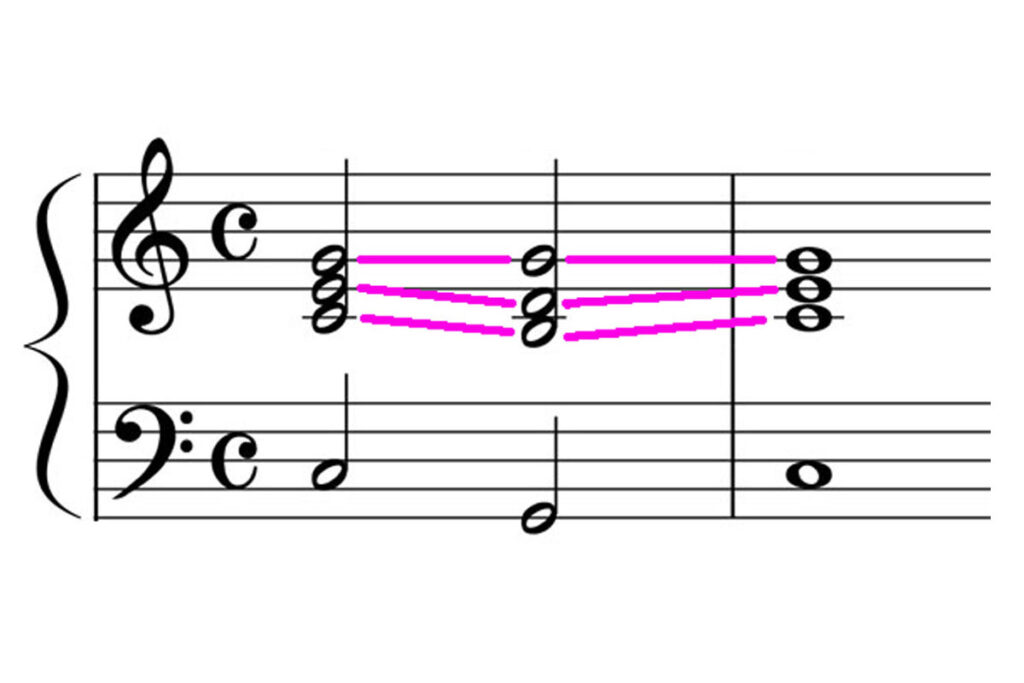
- One of the key principles is the relationship between the soprano (the highest voice) and bass (the lowest voice). For instance, when moving from one chord to another, these voices should move in opposite directions (contrary motion) as much as possible. This creates balance and flow.
- Leading Tones:
- Leading tones (like the 7th note of a scale) should resolve by step to the tonic (the first note of the scale). For example, in a V7-I progression, the leading tone (the 7th of the dominant chord) moves up by a half step to the tonic.
- Leading tones (like the 7th note of a scale) should resolve by step to the tonic (the first note of the scale). For example, in a V7-I progression, the leading tone (the 7th of the dominant chord) moves up by a half step to the tonic.
- Avoid Parallel Fifths and Octaves:
- In classical counterpoint, parallel fifths and octaves are generally avoided because they can make the voices sound too “stuck together” and don’t allow for enough harmonic movement.
Modern Applications
While classical rules are still important in many styles, modern genres like jazz, pop, and rock sometimes break these rules for creative effect. However, understanding traditional voice leading helps composers and arrangers know when to stretch or break the rules for artistic expression.
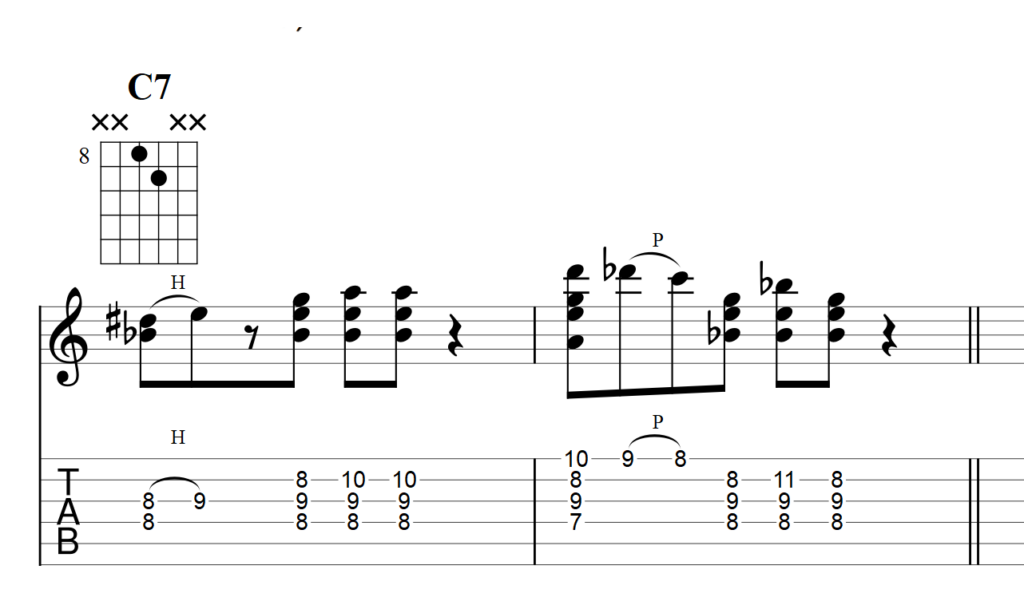
- In Jazz: Jazz often uses more complex harmonies (like extended chords or altered dominants), but voice leading is still key in smooth chord transitions. For example, you might see chromatic voice leading, where a voice moves by half steps instead of whole steps.
- In Pop/Rock: Pop and rock music often use simpler harmonies, but voice leading still plays a huge role in arranging vocal harmonies or transitioning between chords in a smooth way.
Examples in Classical and Modern Music
- Classical Example: A classic I-IV-V-I progression in C major (C-F-G-C) demonstrates voice leading. Notice how the individual voices move stepwise or by a third, avoiding large leaps and ensuring smooth transitions.
- Modern Example: In a pop song like “Let It Be” by The Beatles, voice leading between the chords of C, G, Am, and F is simple but effective, creating a smooth harmonic flow that carries the listener through the song.
Practical Tips
- Keep voices within a comfortable range: This makes the transitions more natural and helps avoid awkward leaps.
- Move voices by step or by small intervals: Aim for motion that feels fluid and avoids creating abrupt shifts.
- Consider the harmonic context: Make sure each voice supports the harmony of the chord in a way that feels grounded and resolved.
Conclusion: Why Does It Matter
It’s not just a technical concept—it’s an artistic tool. Whether you’re writing classical music, jazz, or pop, the ability to move between chords smoothly and naturally helps to create cohesive and emotionally engaging music. By mastering voice leading, you can create harmonic progressions that don’t just sound good, but feel good, guiding the listener seamlessly from one moment to the next.
You could Also read our Article about The Circle of Fifth and it’s practical examples.


Post Comment